Portrait of Yunpeng Bai

Yunpeng Bai白云鹏

I am actively looking for full-time positions (Research Scientist / Research Engineer) starting Fall 2026 / Spring 2027 — feel free to reach out!

I am a Ph.D. student in Computer Science at UT Austin, advised by Qixing Huang. I received my M.S. from Tsinghua University.

I am searching for a path from visual intelligence to general intelligence. Previously, I worked on 3D-aware generation.

News

  • 2026.07PE-Field 4D is accepted to SIGGRAPH Asia 2026.
  • 2026.05I joined Reve AI (now part of OpenAI) as a research intern.
  • 2026.01Positional Encoding Field is accepted to ICLR 2026.
  • 2025.10SizeGS is selected as a Best Paper Candidate at ACM MM 2025.
  • 2025.09GeoVideo is accepted to NeurIPS 2025.

Selected Publications

Positional Encoding Field

Positional Encoding Field

Yunpeng Bai, Haoxiang Li, Qixing Huang

ICLR 2026

Abstract

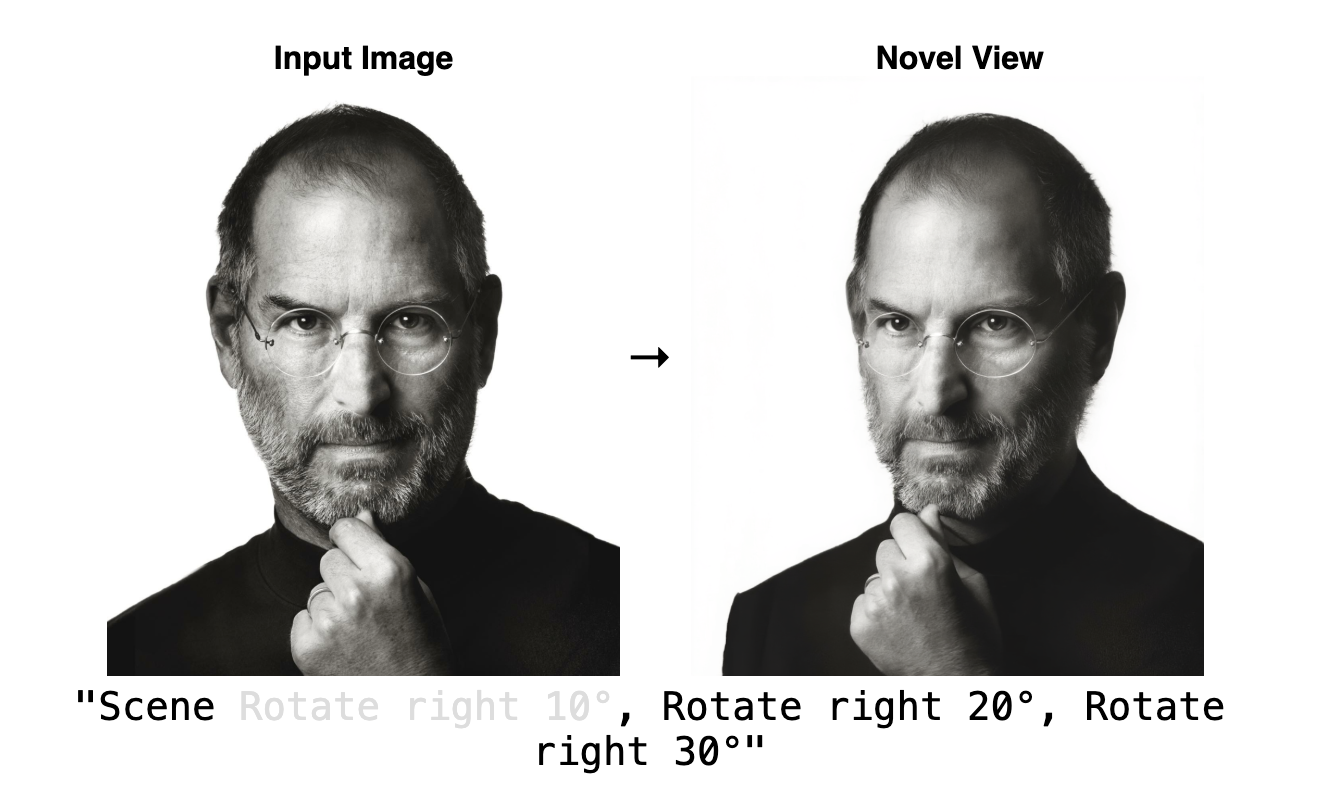
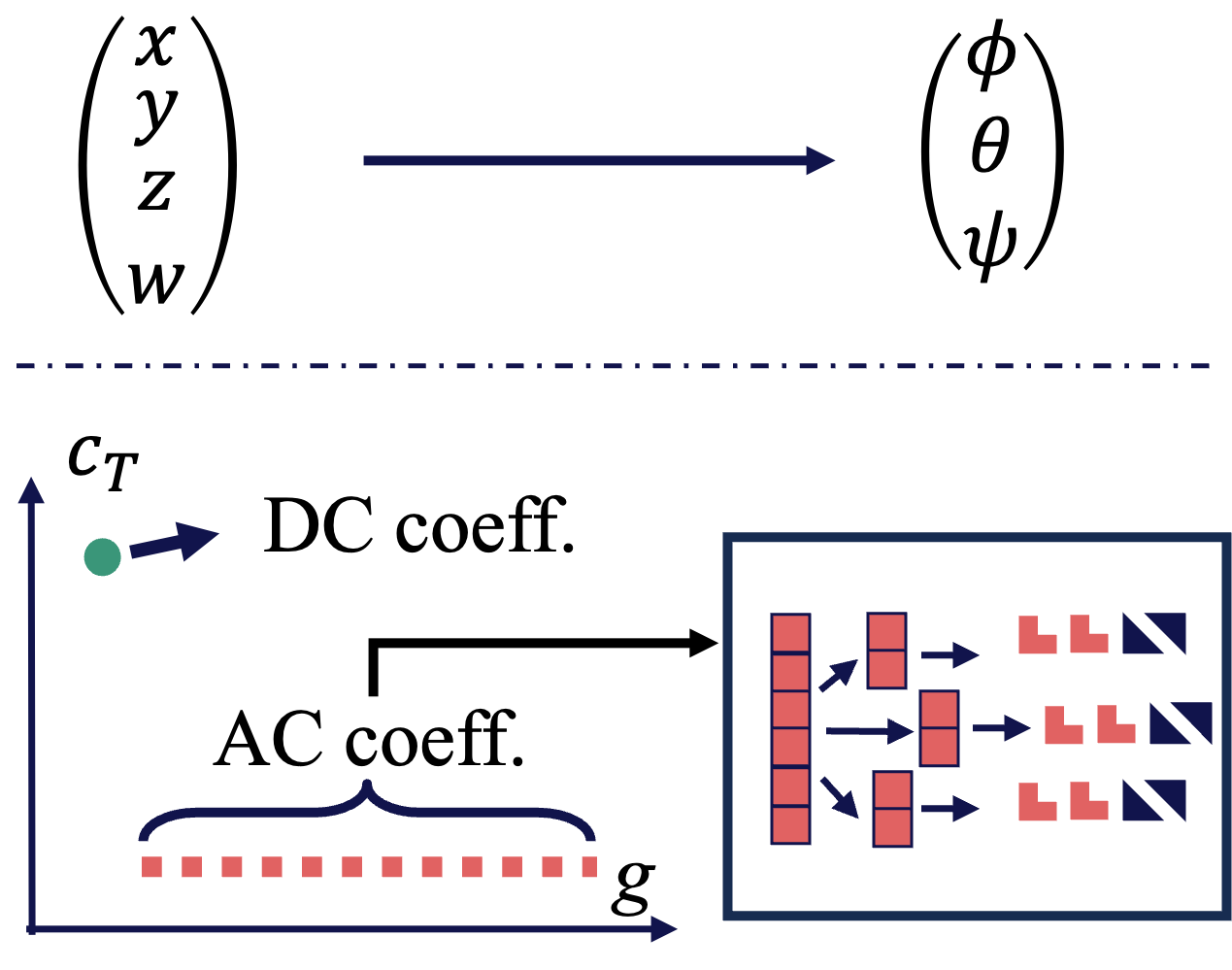
We revisit how DiTs organize visual content and discover that patch tokens exhibit a surprising degree of independence: even when PEs are perturbed, DiTs still produce globally coherent outputs, indicating that spatial coherence is primarily governed by PEs. Motivated by this finding, we introduce the Positional Encoding Field (PE-Field), which extends positional encodings from the 2D plane to a structured 3D field. PE-Field incorporates depth-aware encodings for volumetric reasoning and hierarchical encodings for fine-grained sub-patch control, enabling DiTs to model geometry directly in 3D space. Our PE-Field–augmented DiT achieves state-of-the-art performance on single-image novel view synthesis and generalizes to controllable spatial image editing.

PE-Field 4D

PE-Field 4D: Video Generation Models as Canvas

Yunpeng Bai, Haoxiang Li, Qixing Huang

SIGGRAPH Asia 2026

Abstract

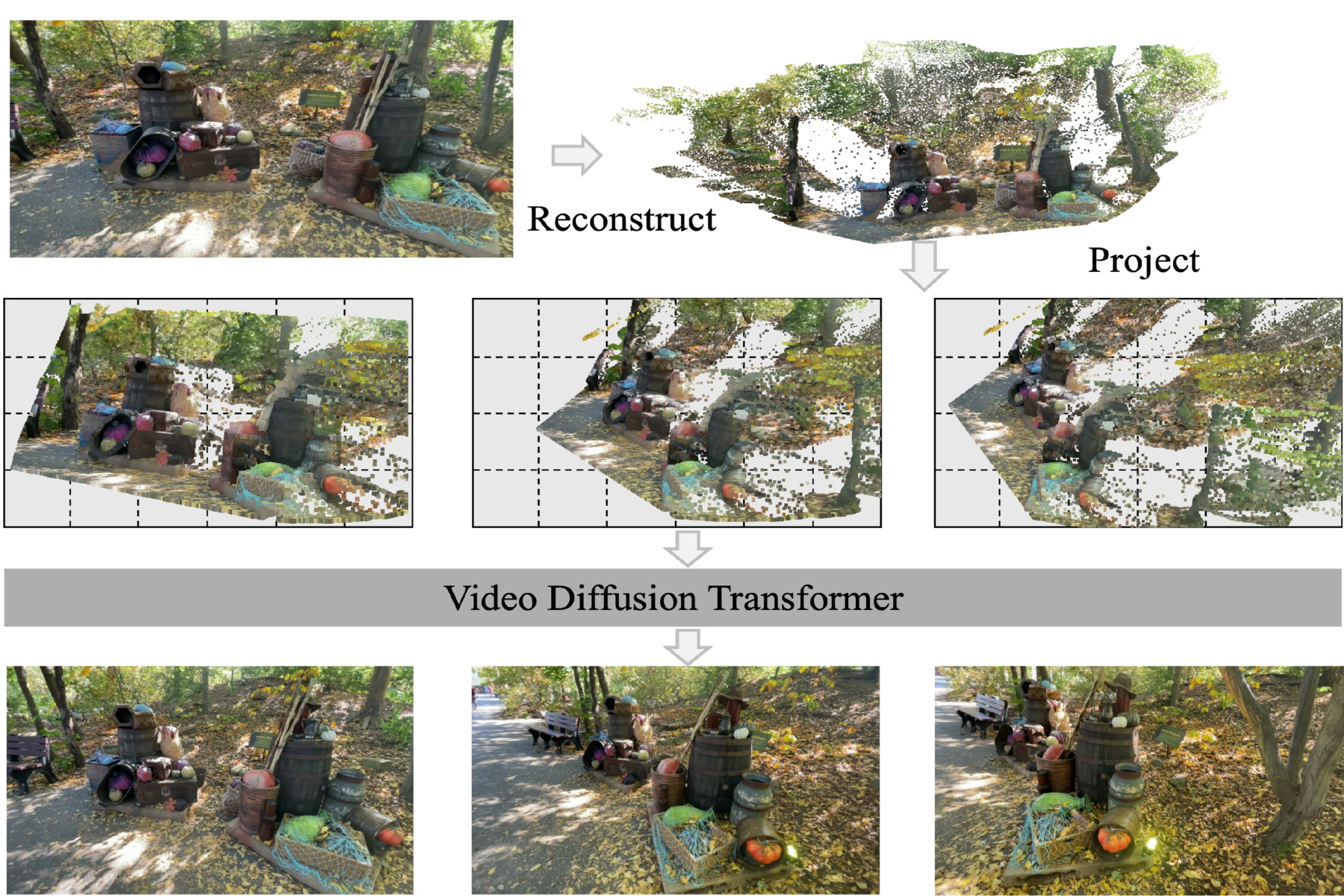
We revisit the role of positional encoding in video diffusion transformers and show that it provides a useful spatial bias for geometry-aware control. If reference tokens are encoded according to their projected locations in the target view, the denoising model is encouraged to retrieve content from position-aligned regions of the input video. Building on this observation, we introduce a geometry-aware cross-attention mechanism that enables target video latent tokens to attend to structured context tokens derived from reference images or frames, with a projected positional encoding scheme that combines target-view 2D reprojection with depth-aware disambiguation.

GeoVideo

GeoVideo: Introducing Geometric Regularization into Video Generation Model

Yunpeng Bai, Shaoheng Fang, Chaohui Yu, Fan Wang, Qixing Huang

NeurIPS 2025

Abstract

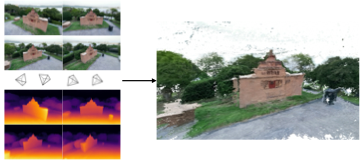
We introduce geometric regularization losses into video generation by augmenting latent diffusion models with per-frame depth prediction. We adopt depth as the geometric representation because of the great progress in depth prediction and its compatibility with image-based latent encoders. To enforce structural consistency over time, we propose a multi-view geometric loss that aligns the predicted depth maps across frames within a shared 3D coordinate system.

FiffDepth

FiffDepth: Feed-forward Transformation of Diffusion-Based Generators for Detailed Depth Estimation

Yunpeng Bai, Qixing Huang

ICCV 2025

Abstract

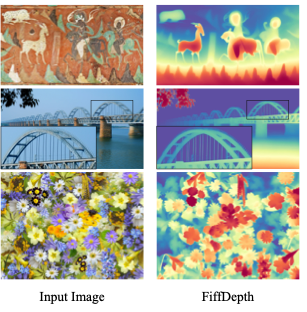
We propose an efficient monocular depth estimation approach named FiffDepth, whose key feature is its use of diffusion priors. It transforms diffusion-based image generators into a feed-forward architecture for detailed depth estimation, preserving key generative features and integrating the strong generalization capabilities of models like DINOv2. FiffDepth achieves exceptional accuracy, stability, and fine-grained detail against state-of-the-art MDE approaches.

MesonGS

MesonGS: Post-training Compression of 3D Gaussians via Efficient Attribute Transformation

Shuzhao Xie, Weixiang Zhang, Chen Tang, Yunpeng Bai, Rongwei Lu, Shijia Ge, Zhi Wang

ECCV 2024

Abstract

MesonGS is a codec for post-training compression of 3D Gaussians. We introduce a measurement criterion that considers both view-dependent and view-independent factors to assess the impact of each Gaussian point on the rendering output, enabling the removal of insignificant points, and decrease the entropy of attributes through two transformations that complement subsequent entropy coding to enhance the compression rate.

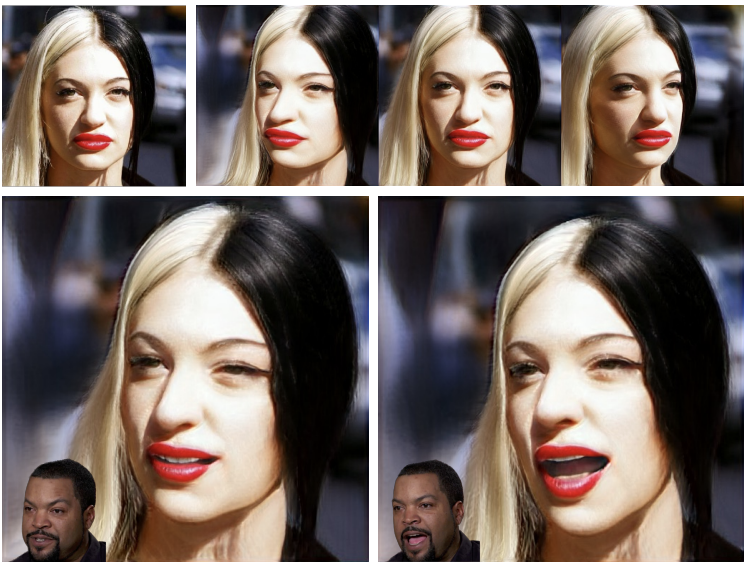
High-Fidelity Facial Avatar Reconstruction from Monocular Video with Generative Priors

Yunpeng Bai, Yanbo Fan, Xuan Wang, Yong Zhang, Jingxiang Sun, Chun Yuan, Ying Shan

CVPR 2023

Abstract

We propose a new method for NeRF-based facial avatar reconstruction that utilizes 3D-aware generative priors. Different from existing works that depend on a conditional deformation field for dynamic modeling, we propose to learn a personalized generative prior, formulated as a local and low-dimensional subspace in the latent space of a 3D-GAN.

TextIR

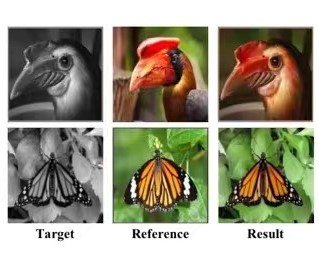
TextIR: A Simple Framework for Text-based Editable Image Restoration

Yunpeng Bai, Cairong Wang, Shuzhao Xie, Chao Dong, Chun Yuan, Zhi Wang

TVCG 2025

Abstract

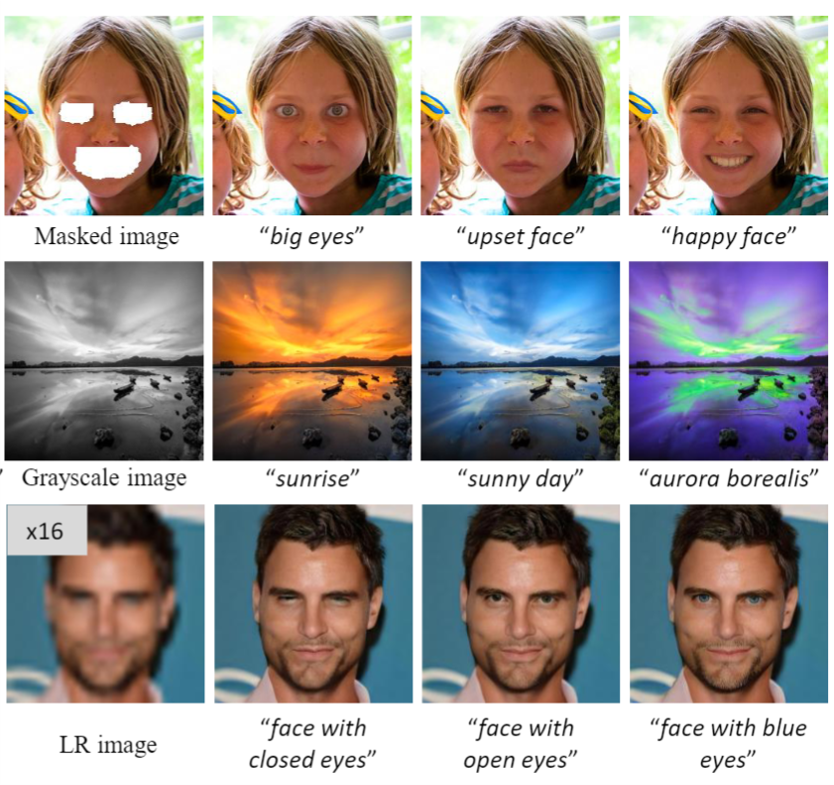
We design an effective framework that allows the user to control the restoration process of degraded images with text descriptions, using CLIP's text-image feature compatibility to alleviate the difficulty of fusing text and image features. Our framework can be used for various image restoration tasks, including image inpainting, super-resolution, and colorization.

SEAM

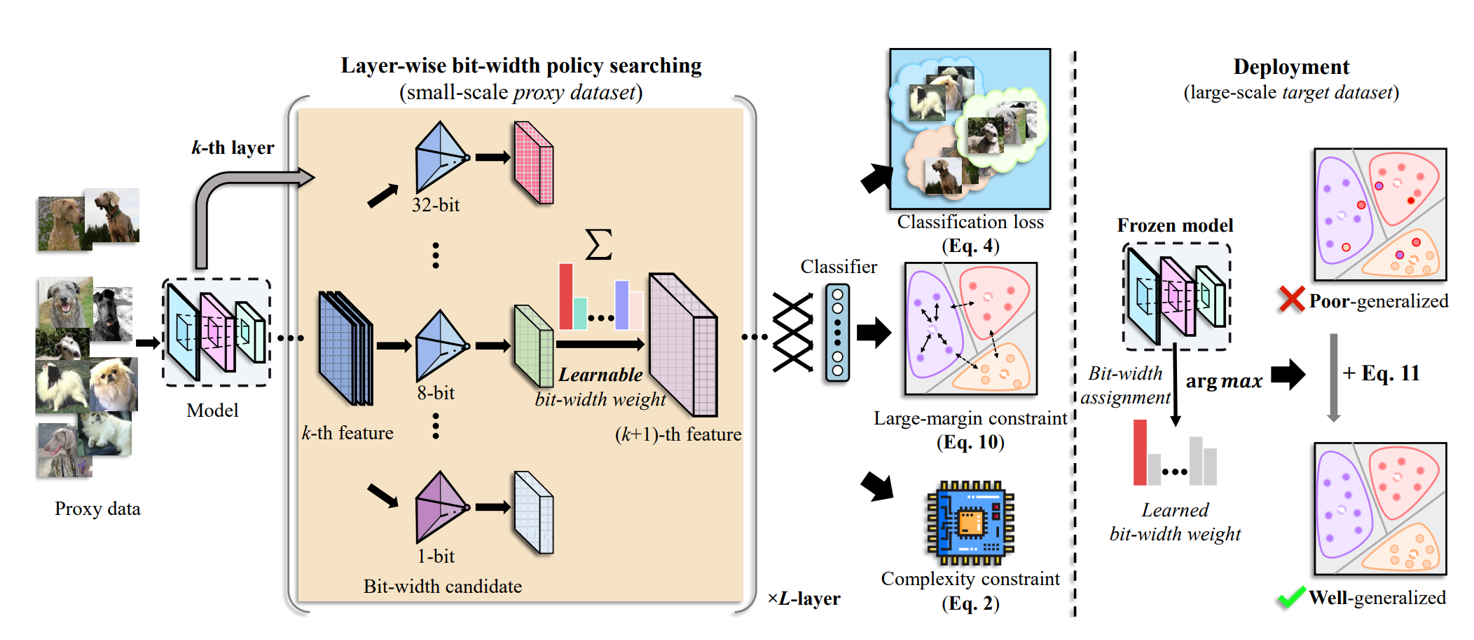
SEAM: Searching Transferable Mixed-Precision Quantization Policy through Large Margin Regularization

Chen Tang, Kai Ouyang, Zenghao Chai, Yunpeng Bai, Yuan Meng, Zhi Wang, Wenwu Zhu

ACM MM 2023

Abstract

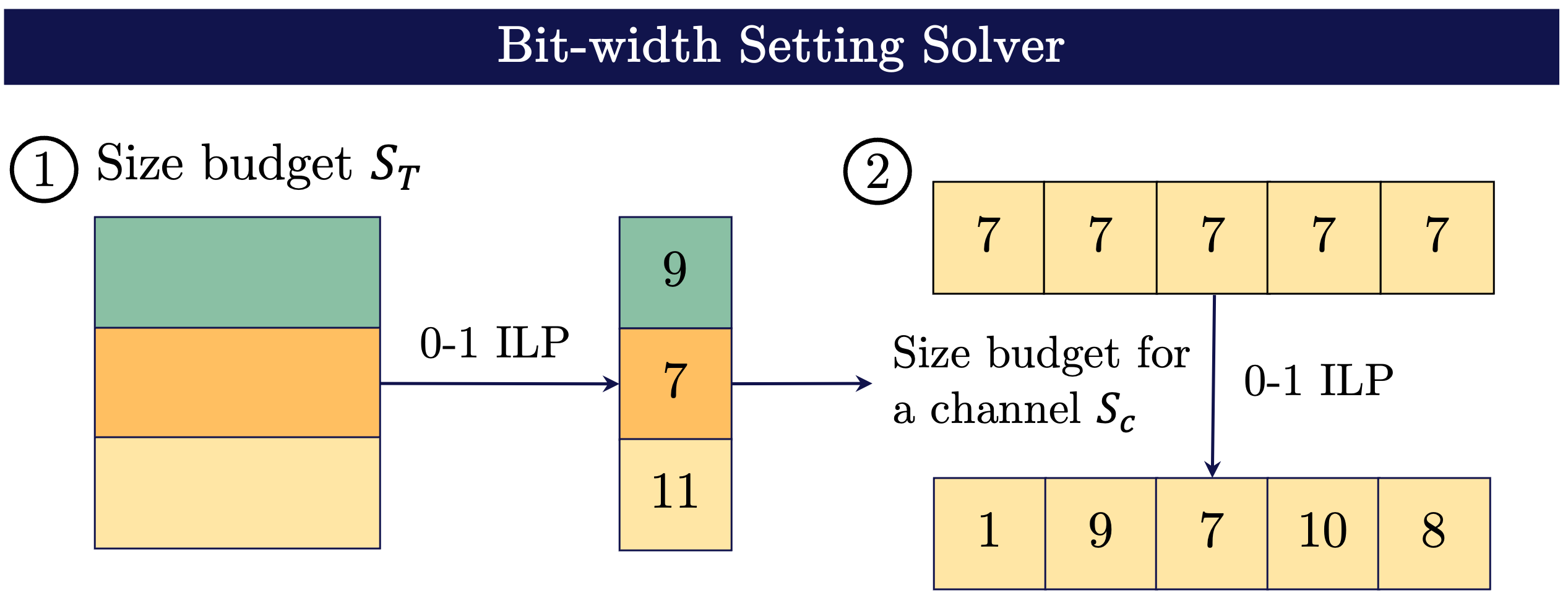
We propose to search the effective mixed-precision quantization policy by using a small proxy dataset for a model trained on a large-scale one, breaking the routine that requires a consistent dataset at model training and MPQ policy search time, which significantly improves MPQ searching efficiency.

PS-NeRV: Patch-wise Stylized Neural Representations for Videos

Yunpeng Bai, Chao Dong, Cairong Wang, Chun Yuan

ICIP 2023

Abstract

We study how to represent a video with implicit neural representations (INRs) and propose a patch-wise solution, PS-NeRV, which represents videos as a function of patches and the corresponding patch coordinates. It naturally inherits the advantages of image-wise methods and achieves excellent reconstruction performance with fast decoding speed.

CMS-LSTM

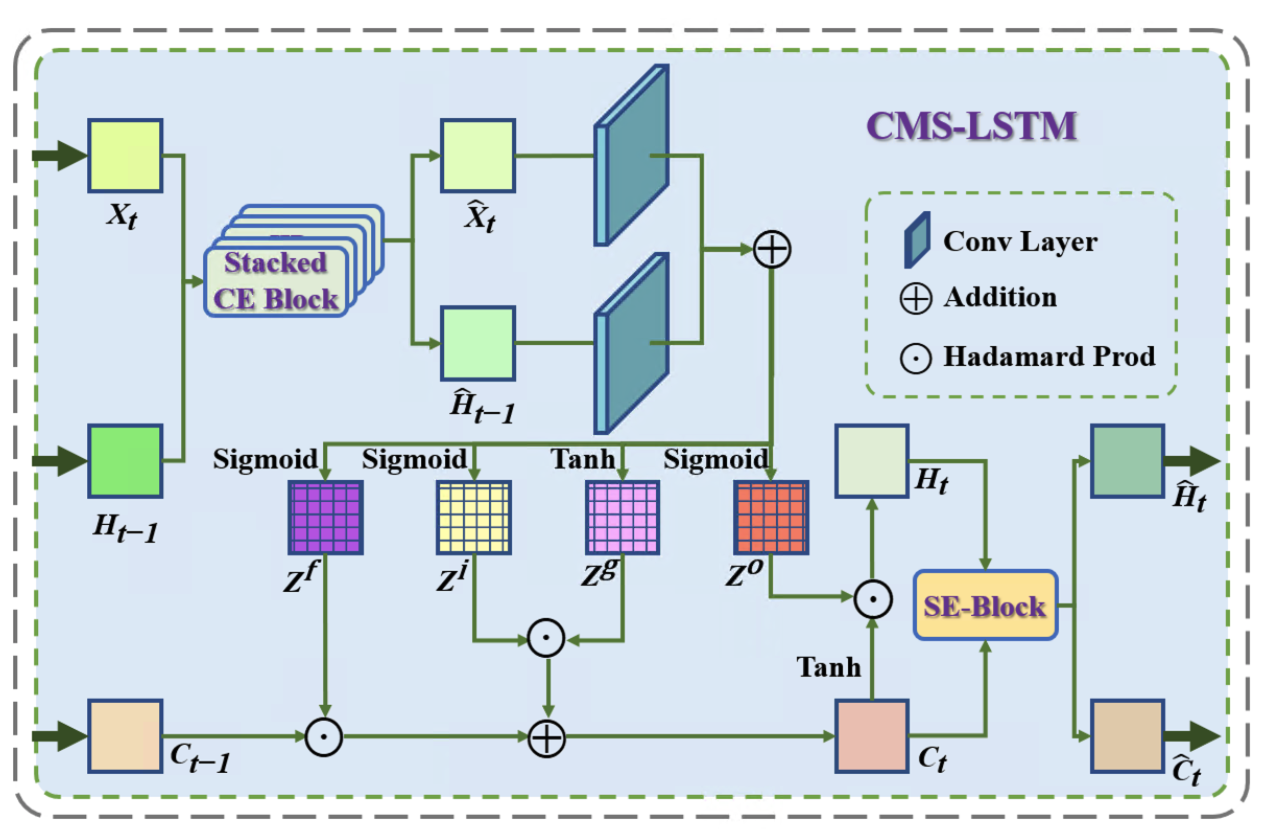
CMS-LSTM: Context Embedding and Multi-Scale Spatiotemporal Expression LSTM for Predictive Learning

Zenghao Chai, Zhengzhuo Xu, Yunpeng Bai, Zhihui Lin, Chun Yuan

ICME 2022

Abstract

To tackle increasing ambiguity during forecasting, CMS-LSTM focuses on context correlations and multi-scale spatiotemporal flow with fine-grained local details, containing two elaborately designed blocks: Context Embedding (CE) for abundant context interactions and Spatiotemporal Expression (SE) for multi-scale spatiotemporal expression in hidden states.

TRNet

Latent Tangent Space Representation for Normal Estimation

Junjie Cao, Hairui Zhu, Yunpeng Bai, Jun Zhou, Jinshan Pan, Zhixun Su

IEEE TIE 2022

Abstract

We propose a simple deep network, TRNet, to estimate normal vectors based on a latent tangent space representation learned in the network. For each query point, the representation is a set of latent points spanning its tangent plane, generated using only the coordinates of its neighbors and regularized by a differentiable RANSAC-like component.